AI Voice Assistants in Canadian Property Management: Market Growth, Regulation & Technical Architecture
The Canadian property management sector is undergoing a fundamental transformation driven by artificial intelligence-powered voice assistants. As generative AI in real estate expands from $770 million USD in 2025 to $1 billion in 2026 at a 30.4% CAGR [1], voice-enabled conversational agents are emerging as mission-critical middleware between public telephone networks and core property management systems such as AppFolio, Yardi, and Buildium [6][15]. This analysis examines market dynamics, regulatory frameworks, technical architectures, and platform benchmarks for AI voice adoption in Canadian multifamily and commercial real estate.
1. Market Context & Financial Growth of Canadian PropTech
The Canadian PropTech market is experiencing exponential growth backed by substantial capital investment and operational efficiency demands [1][2]. Research and Markets projects the generative AI in real estate market to expand from $770 million USD in 2025 to $1 billion in 2026, reaching $2.86 billion by 2030 [1]. This trajectory is driven by mass adoption of automation tools, analytical data management, and cloud-based conversational assistants [1].
In the Canadian geographic context, this financial dynamism reflects in corporate office absorption. According to CBRE's Tech Gateway report, tech-sector office leasing represented 32.2% of total commercial transactions in Canada during Q1 2026, compared to 14.7% in 2025 [2]. Toronto, Vancouver, and Montreal lead this recovery [2]. In Toronto specifically, venture capital funding directed at AI companies accumulated $7 billion USD between Q1 2020 and Q1 2026 [2].
Academic research by Maxwell Oyom demonstrates that AI implementation in Canada optimizes five key real estate marketing dimensions: content quality, time efficiency, buyer interaction, digital asset presentation, and lead targeting effectiveness [3]. By delegating administrative tasks to automated voice processing systems, organizations reduce transaction cycles and increase engagement by up to 35% [4].
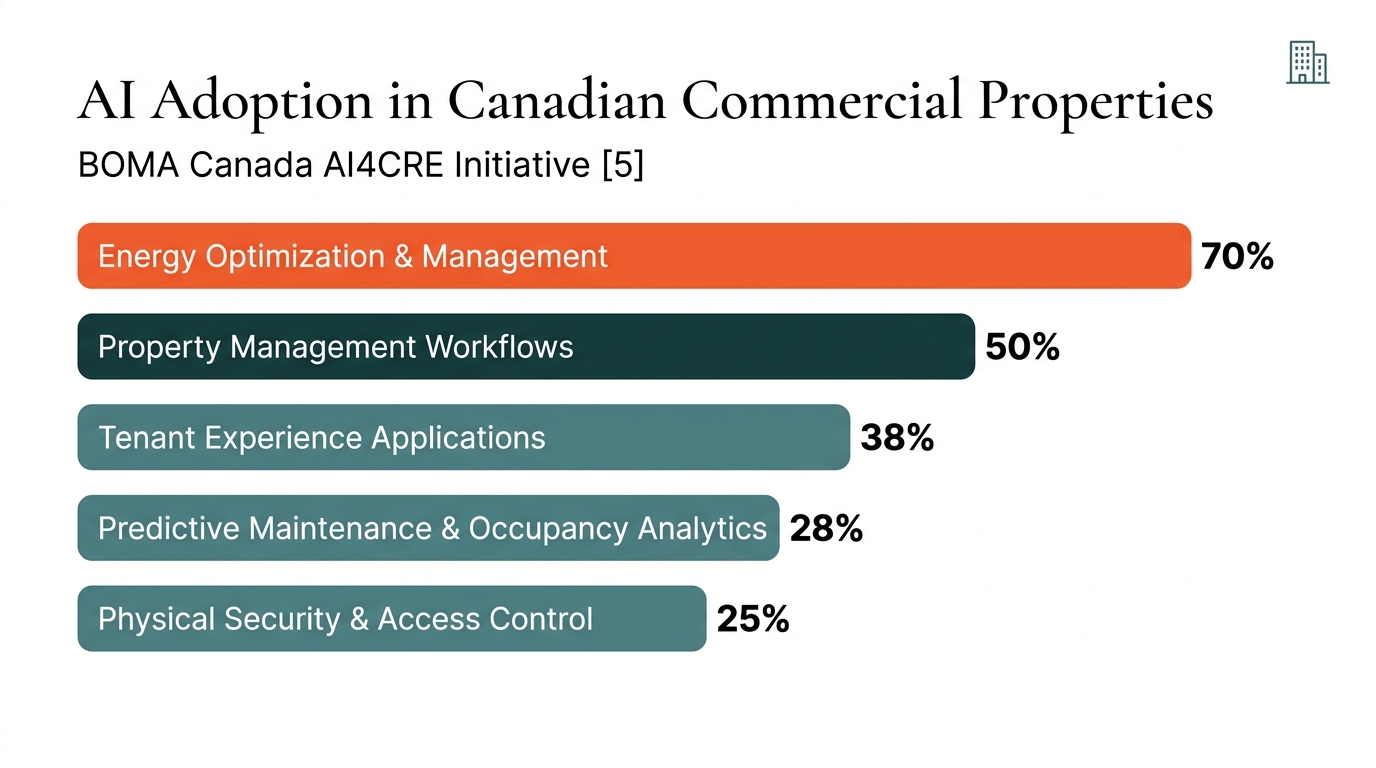
Table 1: AI Adoption in Canadian Commercial Properties
| Operational Application | Adoption Rate | Source |
|---|---|---|
| Energy Optimization & Management | 70% | [5] |
| Property Management Workflows | 50% | [5] |
| Tenant Experience Applications | <40% | [5] |
| Predictive Maintenance & Occupancy Analytics | <30% | [5] |
| Physical Security & Access Control | <30% | [5] |
2. Critical Functionalities of Voice AI in Lease Management
AI-powered voice assistants act as intelligent middleware between public telephone networks and central property management systems [6]. Their value proposition centers on mitigating revenue loss from unanswered inbound calls [7].
2.1 Lead Pre-Qualification & Capture
When a prospect submits a contact form late at night, response time defines conversion probability [8]. The "Connected in 10" methodology demonstrates that contacting a prospect within the first 10 seconds of their inquiry allows qualification in under 5 minutes, increasing the probability of closing a property visit by 3.7% compared to follow-up calls made the next day [9].
During initial telephone interactions, conversational voice agents collect and structure essential prospect variables through dynamic data extraction techniques [11]:
- Budget & Capacity: Direct inquiry into salary ranges and pre-approval status
- Policy Alignment: Cross-verification on pet ownership, smoking policies, and parking requirements
- Geographic Parameters: Identification of preferred micro-markets and neighborhoods
- Transaction Timeline: Classification of urgency level (immediate move vs. long-term planning)
2.2 Appointment Scheduling & Self-Guided Tours
Voice systems connect in real-time with corporate calendar APIs [10]. The assistant offers available time slots, processes cancellations and rescheduling without human intervention, and sends SMS notifications — reducing no-show rates [10]. In the context of dispersed Canadian single-family housing, this workflow integrates directly with smart electronic locks and biometric identity validation systems, ensuring secure self-guided tours against unauthorized access [15].
2.3 Maintenance Order Triage & After-Hours Support
Processing and triaging maintenance orders during extended hours is a critical function, reducing reliance on costly third-party call center services [6]. Through advanced text classification and sentiment detection algorithms, the assistant analyzes call severity [11]. For example, if a tenant reports a major water leak or heating failure during a Canadian winter, the assistant recognizes the emergency, generates a critical-priority work order in the property management software, instructs the tenant on water shut-off valve locations to limit damage, and immediately transfers the call to the on-call technician [11]. Routine requests are logged for resolution during regular business hours [16].
Table 2: Performance Comparison — Traditional vs. AI-Assisted Operations
| Performance Metric | Conventional Channel | AI-Assisted Operation | Source |
|---|---|---|---|
| Lead Response Time | 24–48 hours | <10 seconds | [9] |
| Lead Qualification Time | 15–30 minutes | <5 minutes | [9] |
| Conversion Rate Lift | Baseline | +3.7% | [9] |
| Maintenance Triage Accuracy | Human-dependent | Sentiment-based classification | [11] |
3. Corporate Adoption & Case Studies
The Canadian real estate market presents significant case studies illustrating the technical viability and ROI associated with voice assistant implementation in large-scale multifamily and commercial properties.
3.1 QuadReal Property Group: Voice Channel Integration
QuadReal Property Group, one of Canada's most prominent real estate investment, development, and management firms based in British Columbia, faced the challenge of unifying its telephone service channels during its transition to Microsoft Teams [20]. The solution was the adoption of ComputerTalk's ice Contact Center platform, natively integrated with the Teams ecosystem [20].
The implemented architecture enabled QuadReal to improve help desk response speeds through intelligent routing based on call priority rules and geographic segmentation of Canadian assets [20]. By enabling simplified interfaces leveraging speech recognition and advanced analytics dashboards, the firm reduced technical incidents associated with telephone support and accelerated first-contact resolution times [20].
3.2 LetHub: Native Canadian Voice Automation
British Columbia-based PropTech firm LetHub represents one of the most successful native Canadian developments in front-line tenant support automation [21]. Its chatbot and voice assistant "River" was designed by founder Faizan Ali Khan to free property managers from the overwhelming daily flow of repetitive emails and calls [21]. The company redesigned its NLP and voice processing algorithms using frameworks like PyTorch to humanize conversational tones and optimize intention recognition in ordinary voice calls [22].
LetHub's value proposition lies in the automatic synchronization of voice calls and web inquiries with a lightweight proprietary CRM, eliminating the need for disconnected external tools [22]. Tenants and prospects qualify their needs rapidly through River's automated calls [22].
3.3 Yardi Systems: Unified Record Management
In the corporate residential sphere, Yardi is an undisputed reference in Canada [15]. Its RentCafe Chat IQ platform acts as an advanced conversational assistant unifying leasing support processes across text, email, chat, and voice channels, interacting directly with Voyager data without background synchronization delays [15]. The latest voice engine update includes a human-modulated voice that handles rapid speaker turn-taking and responds based on recent resident request history [27].
4. Canadian Regulatory Framework: Compliance & Governance
Deploying interactive telephone assistants powered by generative AI in Canada is strictly regulated by federal, provincial, and state frameworks [3]. Non-compliance exposes property management firms to costly financial penalties and lawsuits for data confidentiality violations [9].
4.1 PIPEDA (Personal Information Protection and Electronic Documents Act)
PIPEDA constitutes the federal pillar for personal data governance [3]. Voice assistants record, analyze, and store large amounts of sensitive identification data in every interaction, including financial records, government IDs, credit reports, and residential history [11]. Under PIPEDA guidelines, collecting this information requires informed, clear user consent from the start of the call, along with transparent processes for tenants to exercise their right to complete and secure deletion of records and telephone recordings at any time [28]. Voice technology solutions that do not guarantee data isolation and physical hosting of voice recordings on Canadian territory are unviable for corporations operating under this legal environment [15].
4.2 CASL (Canadian Anti-Spam Legislation)
CASL regulates commercial communication channels via electronic means [15]. Specifically, automated SMS follow-up messages or outbound calls using intelligent systems (robocalling) without explicit consent are severely penalized [9]. To comply safely with CASL, firms rely on user-initiated (inbound) call models or express consent (opt-in) contact schemes [9].
4.3 Quebec: Bill 96 (Language) & Bill 25 (Privacy)
Bill 96 imposes strict linguistic guidelines for any residential or commercial property located in Quebec, establishing French as the mandatory language for all commercial interactions [15]. Conversational platforms used in these business units are legally required to interact in native French by default, with capabilities to interpret and respond to Quebec-specific lexical inflections, eliminating the viability of using systems that treat additional languages as mere optional modules [15].
4.4 Provincial Real Estate Regulatory Bodies
Provincial real estate boards (such as RECO in Ontario, REBGV in British Columbia, and OACIQ in Quebec) establish strict ethical principles of commercial transparency and consumer protection [28]. Key insight from ADM+S Centre research is the requirement for explicit disclosure [30]. Incidents of automated cold calls where the customer cannot immediately discern they are interacting with a software entity expose brokerages to severe reputational damage and consumer complaints [30]. Assistants must declare their artificial nature in their welcome greeting to safeguard the legitimacy of the client relationship and document the interaction ethically [28].
5. Technical Architecture for Real-Time, Low-Latency Conversation
The practical viability of a conversational voice system depends on strict latency mitigation [6]. Technical analysis warns that users tend to hang up immediately or experience deep frustration if a silence pause exceeds 1,000 milliseconds, making systems based on slow data requests unviable [6].
To ensure a voice assistant responds within an imperceptible interval (ideally below 500–800 milliseconds), software architects employ asynchronous data pipelines and bidirectional streaming protocols based on WebSockets or gRPC [12]:
- Audio Input Processing (Telephony): User voice signal is collected via PSTN networks and routed asynchronously via SIP trunking through systems like Twilio Media Streams, encoding the audio stream in 20-millisecond PCM packets [12].
- Ultra-Low-Latency Speech Recognition (ASR/STT): Audio packets are immediately processed by continuous transcription engines like Deepgram Nova-2 or optimized Whisper configurations, featuring advanced Voice Activity Detection (VAD) algorithms to precisely detect when the user interrupts or stops speaking [7].
- Conversational Orchestration & Asynchronous Middleware: To solve the slow processing problem of large language models (LLMs over 70B parameters), voice orchestrators use high-speed, fine-tuned local small models [12]. The orchestrator interacts with property databases asynchronously via GraphQL or REST webhooks [12]. While querying backend data, the orchestrator temporarily fills the voice channel by intelligently emitting human colloquial expressions or brief filler phrases (such as "let me check that for you," "of course," or acknowledgment sounds) to ensure the user does not experience uncomfortable silence [12].
- High-Fidelity Speech Synthesis (TTS): Resulting model inference data is converted into a modular audio stream via millisecond-optimized speech synthesis services (such as ElevenLabs, Cartesia, or native voice provider engines), projecting a warm, professional tone with regional accentuation [6].
6. Platform Comparison & Performance Metrics
Selecting the appropriate conversational platform for a residential or commercial portfolio requires careful analysis of business technical priorities and available development resources [37].
Table 3: Voice AI Platform Comparison for PropTech & Real Estate
| Platform | Avg Latency | Pricing Model | Target Profile | Key Advantages | Technical Limitations |
|---|---|---|---|---|---|
| VAPI | ~536 ms [37] | $0.05/min + LLM costs [37] | Mid-large corporate | Flexible API; advanced maintenance workflow validation [37] | Requires specialized developers; complex initial setup [37] |
| Retell AI | ~714 ms [37] | ~$0.07/min [37] | Maintenance-focused | Intuitive visual flow designer; excellent hot transfer handling [37] | Few native pre-built connections to traditional real estate software [37] |
| Synthflow | ~1,000 ms [37] | $29–$450/month [37] | Small agencies, independent owners | 100% no-code; direct calendar integration [37] | High latency; prone to failures in complex multi-route flows [37] |
| LuMay AI | ~320–450 ms [36] | From $0.05/min [39] | Mid-market, scaling corporations | Lowest market latency; SOC2/HIPAA privacy compliance [36] | Meticulous custom implementation requirements [38] |
| Point Break Systems | Variable [28] | Volume-based [28] | Bilingual Canadian brokerages | Native CASL/PIPEDA compliance; CREA listing integration [28] | Heavy Canadian market focus; limited customization [28] |
7. Strategic Recommendations for Property Managers
Based on the comprehensive analysis, the following strategic guidelines are recommended for Canadian property managers implementing AI voice assistants [4][15][34]:
- Prioritize Regulatory Assessment Over Software Performance: No tool, regardless of speed or cost, is viable without guaranteed PIPEDA compliance, CASL contact exclusion management, native Quebec Bill 96 bilingualism, and provincial real estate board honesty guidelines [15]. Contract detailed technical and legal audits with specialized local firms before connecting automated conversational flows to tenant databases [34].
- Implement Exclusive Two-Way Real-Time API Integrations: Automation efficiency breaks if data collected by the intelligent telephone assistant takes hours to reflect in building accounting and operational systems [15]. Reject conversational tools that depend on scheduled batch data loads, requiring that every visit scheduling, incident report, or collection record be written instantly to Yardi, AppFolio, or Buildium databases via secure bidirectional API calls [6].
- Ensure Channel Appropriateness for Canadian Tenants: Avoid software configurations designed for the US market that exclusively syndicate listings to Zillow [15]. Configure conversational and voice assistants to interact with Canadian-preferred channels: RentFaster, Rentals.ca, Kijiji, and Facebook Marketplace, integrating communications under unified local infrastructure [15].
- Follow a Gradual Risk-Level Adoption Methodology: Structure implementation in three logical phases: (1) Initial — answering after-hours calls and general FAQs [6]; (2) Intermediate — pre-qualification, scheduling, and access integration [12]; (3) Advanced — complex maintenance triage, proactive rent collection campaigns, and digital lease renewal signing [16].
Conclusions
The adoption of AI voice assistants is a commercial imperative for maintaining operational competitiveness and maximizing rental revenue in the dynamic Canadian market [4]. Key findings include:
- Market growth: Generative AI in real estate is expanding at 30.4% CAGR, with Toronto capturing $7 billion USD in VC funding [1][2]
- Operational efficiency: AI-assisted lead qualification achieves +3.7% conversion lift through instant contact [9]
- Regulatory rigor: PIPEDA, CASL, Quebec Bill 96, and provincial real estate boards mandate explicit disclosure, data isolation, and linguistic compliance [15][28][30][34]
- Latency benchmarks: Leading platforms achieve 320–536 ms conversational latency, with 1,000 ms as the maximum acceptable threshold [6][36][37]
- Adoption gaps: Only 23% of portfolio properties have AI enabled, with tenant experience applications below 40% [5]
By following a rigorous, phased approach with regulatory-first assessment, Canadian property management firms can substantially increase ROI and operational efficiency while ensuring reliable, transparent tenant interactions in a secure compliance environment [4][15][34].
- [1] Generative AI in Real Estate Market Report 2026. Link
- [2] CBRE Report: AI Investment Fuels Office Leasing Recovery. Link
- [3] Leveraging Artificial Intelligence to Improve Real Estate Marketing Efficiency in Canada. Link
- [4] How AI is Changing Real Estate Behind the Scenes — REW. Link
- [5] BOMA Canada Report Shows Gaps in Artificial Intelligence Adoption — RENX. Link
- [6] Ultimate AI Voice Agent for Property Management Companies: Complete Guide (2026) — LuMay AI. Link
- [7] Build an AI Voice Agent for Real Estate in 2026 — Appinventiv. Link
- [8] How to Build an AI Voice Agent for Real Estate in 2026 — Hyperlink InfoSystem.
- [9] Connected in 10: AI Voice Assistant for Luxury Property Leads — GenerousApp. Link
- [10] Voice AI Agents for Real Estate: 2026 Guide — RaftLabs. Link
- [11] AI Receptionist for Property Management That Never Misses Calls — Voice.ai. Link
- [12] AI Voice Agent for Real Estate Software Solutions — Seasia Infotech. Link
- [13] AI Voice Agent for Real Estate — SimpleUp AI.
- [14] Build & Deploy Powerful Voice AI Agents — 3CLogic. Link
- [15] AI Leasing for Yardi Shops: Top-of-Funnel Automation for Canadian Portfolios — LetHub. Link
- [16] Property Management — AI-Powered Customer Support — Callnovo. Link
- [17] AI Property Management Chatbot — NextLevel.
- [18] Top AI Virtual Leasing Assistants — Funnel Leasing. Link
- [19] AI for PropTech Directory. Link
- [20] QuadReal Property Group — Customer Success Stories — ComputerTalk. Link
- [21] Startup Makes AI-Powered Chatbot for Property Managers — Inman. Link
- [22] Case Studies: LetHub — GritLab. Link
- [23] AI Agent for Property Managers — LetHub. Link
- [24] LetHub — AI Leasing Automation. Link
- [25] Yardi Chat IQ — AI-Powered Leasing Assistant. Link
- [26] RentCafe Chat IQ — Yardi. Link
- [27] Chat IQ: New AI Features — Yardi Blog. Link
- [28] AI Calling for Canadian Real Estate Agents — Point Break Systems. Link
- [29] Privacy Policy — Luxsle Corp. Link
- [30] AI Cold-Calling "Real Estate Assistant" Raises Issues of Consent — ADM+S Centre. Link
- [31] A Legal Guide to Privacy and Data Security 2025 — Minnesota Legislative Reference Library. Link
- [32] Voice AI Agent for Financial Services — Master of Code Global.
- [33] Relay These Privacy Tips to Clients Who Use Voice Assistants — NAR. Link
- [34] PVRPOSE AI — The AI Workflow Rebuild. Link
- [35] Truecaller and Microsoft: AI Answers Calls — ModelProp.
- [36] Best AI Voice Agent Stack 2026 — LuMay AI. Link
- [37] Top 4 Voice AI Platforms for Property Management (2026) — VoiceAI Guide. Link
- [38] Best AI Voice Agent Platforms for Businesses in 2026 — LuMay AI. Link
- [39] Top 10 Best AI Voice Agent Platforms for Real Estate in 2026 — LuMay AI. Link
- [40] What Is Yardi Software — BC Solutions.
- [41] Aigentum: AI Voice & Chatbot Assistants for Hotels.
- [42] AI Voice for Property Management — Voxworks.
- [43] Real Estate Automation & AI Agent Services — PropTech Vision.